In the vast world of mathematics, modular arithmetic is a fascinating branch that relies on the concept of 'modulo'. Imagine a clock where, after 12, the hand returns to 1: this is the very essence of modulo. This technique, as simple as it may seem, has surprising and varied applications. Whether it’s to calculate the exact time after a certain number of hours or to determine the parity of a number, modulo is a powerful tool. In the context of programming, and more specifically in Python, the modulo operator proves to be a valuable ally in solving many practical problems. Let’s explore this concept together to discover its multiple facets and incredible utility.
The modulo in mathematics
Modulo, often denoted by the symbol %, is a fundamental mathematical operation that plays a crucial role in various fields such as cryptography, computer science, and discrete mathematics. It allows you to determine the remainder of an integer division of two numbers. To fully understand its utility, it is essential to first grasp how it works in a mathematical context.
Definition of Modulo
The concept of modulo is based on Euclidean division. When you divide an integer (a) by another integer (b), you get a quotient (q) and a remainder (r). Formally, this is expressed as follows:
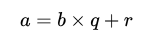
where
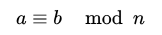
Basics of the modulo operator in python
Python, as a versatile programming language, offers a simple and straightforward implementation of the modulo operator, allowing developers to easily leverage this fundamental mathematical operation.
Syntax of the Modulo Operator
The modulo operator in Python is represented by the symbol %. Its syntax is simple: a % b returns the remainder of the division of a by b. Here’s a basic example:
In this example, the program divides 17 by 5, and the remainder of this division is 2, as explained in the previous section on modulo in mathematics.
Useful Properties in Python
The modulo operator in Python respects the same mathematical properties described earlier, which can be very useful in various programming contexts:
- Parity Check: To determine if a number is even or odd, one can use modulo with 2. If
number % 2 returns 0, the number is even.
- Cycle and Repetition: To manage cycles, such as the days of the week or months of the year, modulo is very effective. For instance, to determine the day of the week 10 days after a Monday (day 1), one can use:
Special Cases
It is important to note that in Python, if b is negative, the result of a % b will also be negative or zero, following the convention of the sign of the divisor. This can influence certain calculations in specific contexts.
The modulo operator in Python thus offers a powerful and flexible way to solve various programming problems, leveraging its fundamental mathematical properties to provide effective and elegant solutions.
The modulo operator in python in practice
In practice, the modulo operator in Python is used to solve a variety of common problems that benefit from manipulating remainders of divisions. Let’s explore some practical applications that illustrate the versatility of this operator.
Managing Cycles and Loops
One of the most common uses of the modulo operator is in cycle management, particularly for looping through a sequence. For instance, suppose you have a list of colors and you want to apply these colors cyclically to a series of elements.
In this example, the modulo operator ensures that even if the elements list is longer than colors, the colors are applied repeatedly and cyclically.
Data Validation
The modulo operator is also useful for checking data validity, such as determining if a credit card number is valid according to the Luhn algorithm. This algorithm uses modulo to verify the checksum of a card number.
Clocks and Calendars
Clocks and calendars often use modulo to manage cycle changes. For example, to calculate the number of hours after a certain number of days:
Games and Simulations
In game development, modulo is used to create looping effects or to manage positions in grids or tables. For instance, a board game might use modulo to determine a return to the start of the board after exceeding the maximum number of spaces.
These examples show how the modulo operator in Python can be an incredible tool for effectively and elegantly solving practical problems, leveraging its mathematical properties to offer intelligent and optimized solutions.
Advanced uses of the modulo operator in python
The modulo operator in Python is not limited to basic applications; it is also used in advanced contexts, including algorithm optimization and solving complex problems in computer science and mathematics.
Cryptography
One of the most advanced uses of modulo is found in the field of cryptography, particularly in asymmetric encryption algorithms like RSA. These algorithms rely on modulo operations with very large numbers to generate secure public and private keys. For example, RSA encryption uses the expression (message^e) % n for encryption, where e is the public exponent and n is the product of two large prime numbers.
Optimization Algorithms
In optimization, modulo is used to fairly distribute resources or to balance loads. For example, hashing algorithms often use modulo to distribute elements uniformly across a hash table, thus reducing collisions and optimizing search.
Parallel Programming
In parallel and concurrent programming, modulo can be used to distribute tasks or data among multiple processors or threads. This helps optimize resource usage and improve overall application performance.
Advanced Mathematical Calculations
Mathematicians also use modulo in advanced theorems such as the Chinese Remainder Theorem, which allows finding solutions to systems of congruent equations. This theorem is essential for solving complex congruence problems often encountered in computer systems and networks.
In conclusion, the modulo operator in Python is a powerful tool that goes well beyond basic remainder calculations. Its ability to solve complex problems in cryptography, optimization, and parallelism makes it an essential element in the toolkit of any experienced programmer.
Conclusion
The modulo operator is much more than a simple arithmetic operation; it is an essential tool in many areas of programming and mathematics. In Python, its ease of use and flexibility make it a favored choice for solving a variety of problems ranging from everyday tasks to complex algorithmic challenges.
Summary of Applications
We have seen how modulo is used to manage cycles, whether it’s to repeat patterns or calculate dates in calendars. Its ability to quickly determine parities allows for simplifying condition checks in code. Practical examples have highlighted its crucial role in managing cycles and repetitions, such as resource allocation in loops or creating visual effects in games.
In more advanced contexts, the modulo operator becomes indispensable, particularly in cryptography to ensure the security of digital communications. It also plays a key role in hashing algorithms, optimizing data distribution and minimizing collisions. Mathematicians and engineers use it to solve complex problems like the Chinese Remainder Theorem, once again illustrating its importance in handling congruences.
Importance in Development
Understanding and mastering the use of the modulo operator allows for writing more efficient and elegant code. Whether you are a beginner or an experienced developer, incorporating this operation into your solutions can significantly simplify your work and offer performance gains. It also encourages a more structured algorithmic thinking and a methodical approach to problems, which is essential for developing robust software.
In conclusion, the modulo operator is a fundamental element of Python programming that, when understood and used correctly, opens the door to a multitude of creative and effective solutions. Its ability to transform complex problems into manageable tasks makes it an indispensable tool in the arsenal of any programmer. Whether for simple applications or advanced systems, leveraging modulo can yield effective and innovative solutions.